Guide to Electrical Plugs &
Sockets in Rwanda

Rwanda electricity standard: 230 V, 50 Hz, with plug types C, E, G.

The Rwandan electrical system uses the same 230 V / 50 Hz standard found across most of Africa and Europe. French/Belgian Type E was the former standard, originally from Belgian colonial infrastructure, but Rwanda has now adopted Type G as part of East African Community harmonisation, required in all new construction.

Plug & Socket Types

Rwanda’s sockets are Types E and G. Type C is also listed in international references because the Europlug fits directly into Type E sockets, making it the most common plug in everyday use, even though dedicated Type C sockets are rare.

Legacy
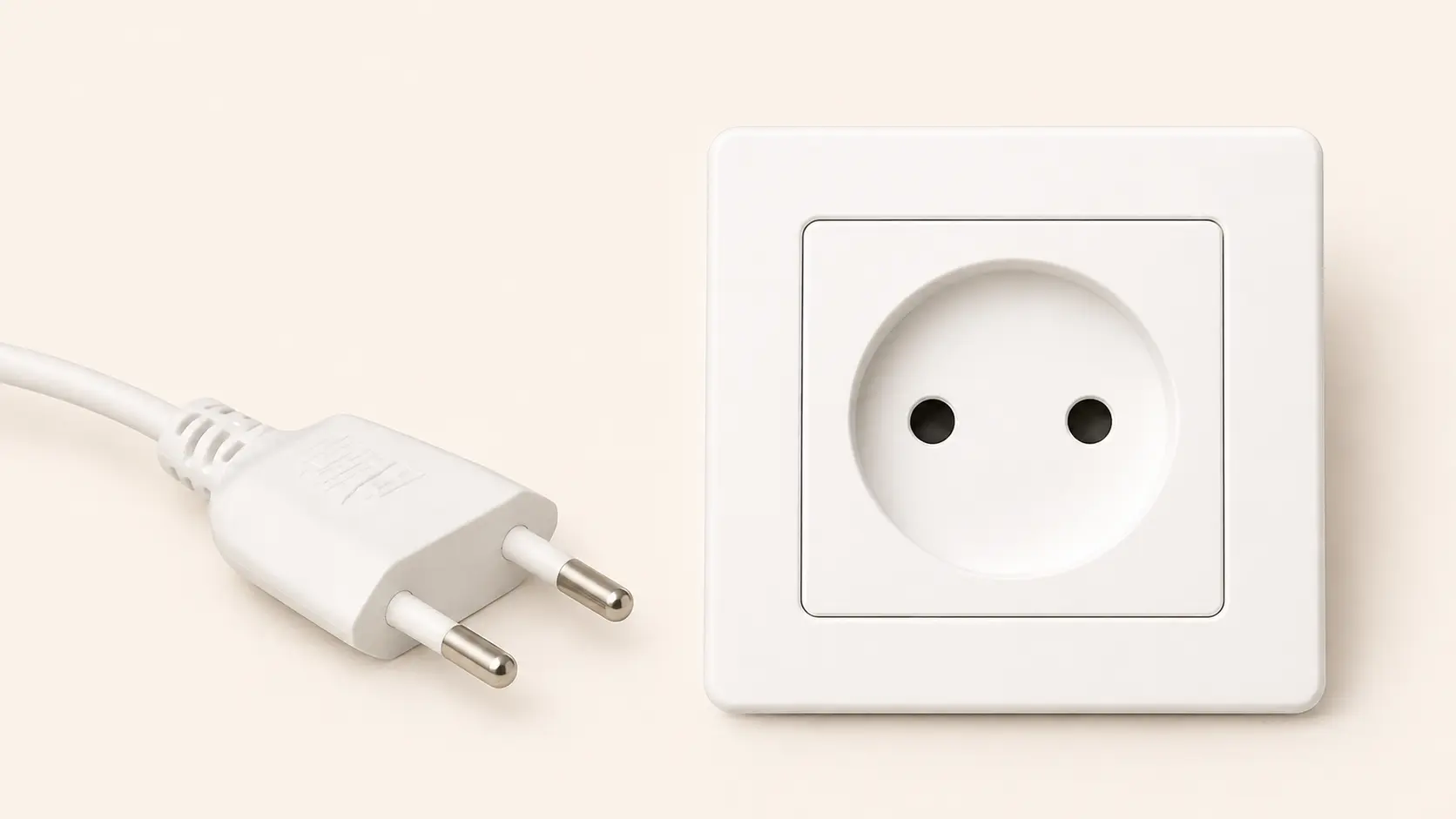
Type C Europlug with matching two-pin Type C socket
C

Type C

Europlug

A compact, ungrounded two-pin plug used for low-power devices like phone chargers, laptops, and small appliances. Type C plugs fit directly into the Type E sockets found throughout Rwanda, making them the most commonly used plug in daily life. Dedicated Type C-only sockets are very rare.

Pins
2 round pins, 4.0 mm diameter, 19 mm spacing
Grounded
No
Rated current
2.5 A
Compatibility
Fits into Type E (and Type F) sockets

Where found

Used throughout Rwanda via compatibility with Type E sockets. The standard plug for chargers, laptops, and small appliances.
Legacy
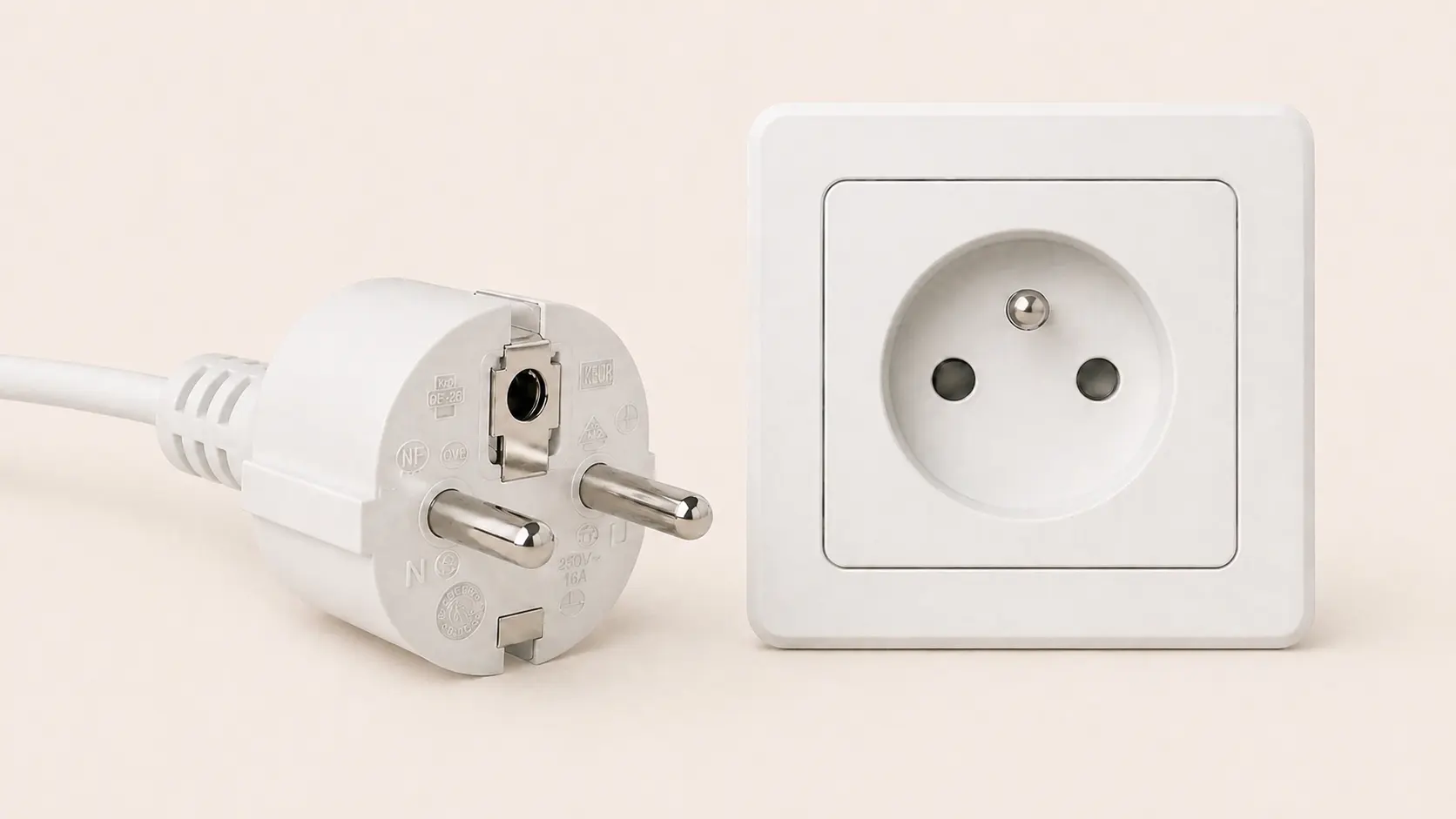
Type E French/Belgian plug with matching socket and socket-side grounding pin
E

Type E

French/Belgian Plug

A grounded plug where the socket provides the grounding pin rather than the plug itself. Once Rwanda's standard, Type E remains the most widespread grounded socket in older buildings. Some homes built in the late 2010s still use Type E, though commercial buildings from that period typically use Type G.

Pins
2 round pins, 4.8 mm diameter + ground pin on socket
Grounded
Yes
Rated current
16 A
Compatibility
Accepts Type C and Type E plugs

Where found

Common in Rwandan buildings and houses constructed before the early 2010s. Still widely encountered, especially outside new construction in urban centres.

Official Standard
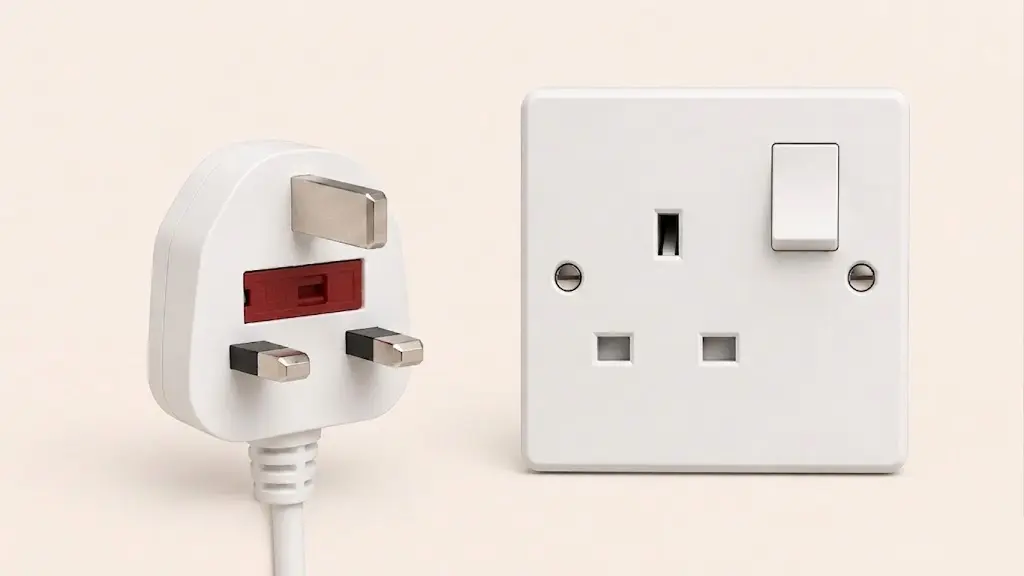
Type G British fused plug with matching three-slot socket
G

Type G

British Plug

A three-pin plug with rectangular pins and a built-in fuse that protects individual appliance circuits. Rwanda adopted Type G as its official standard in the early 2010s as part of East African Community harmonisation, and it is now required in all new electrical installations.

Pins
3 rectangular pins in triangular pattern
Grounded
Yes
Rated current
13 A (fused)
Compatibility
Only fits Type G sockets

Where found

All new construction, commercial properties, hotels, and government facilities. Increasingly common in newer residential buildings across Kigali and other urban centres.

Note on Type F (Schuko): Some databases list Type F because Type E and Type F are often grouped together in European plug-compatibility data. That does not mean Rwanda commonly has Type F Schuko wall sockets. In Rwanda, the plug and socket types used in practice are Type C, Type E and Type G.

The Type J Database Error

Why some sources incorrectly list Rwanda as using the Swiss Type J plug

Incorrect (old data)

C / J

Listed Rwanda with the Swiss Type J plug

Correct (current)

C / E / G

The actual plug types used in Rwanda

Some international databases, notably those derived from IEC (International Electrotechnical Commission) data, incorrectly listed Rwanda as using plug types C and J. The Type J plug is a three-pin design used primarily in Switzerland and Liechtenstein and it has never been part of Rwanda’s electrical infrastructure.

This error likely originated from a data entry mistake that was then propagated across multiple reference databases and travel websites that sourced their information from the same upstream data. Because many sites copy from the same authoritative sources without independent verification, the incorrect C/J listing became widely repeated.

IEC and other sources have since corrected the specific mistake: the corrected IEC listing is plug types C, E, F, and G, not C and J. The important correction is the removal of Type J. Type F appears in some databases because Type E and Type F are often grouped together in European plug-compatibility data.

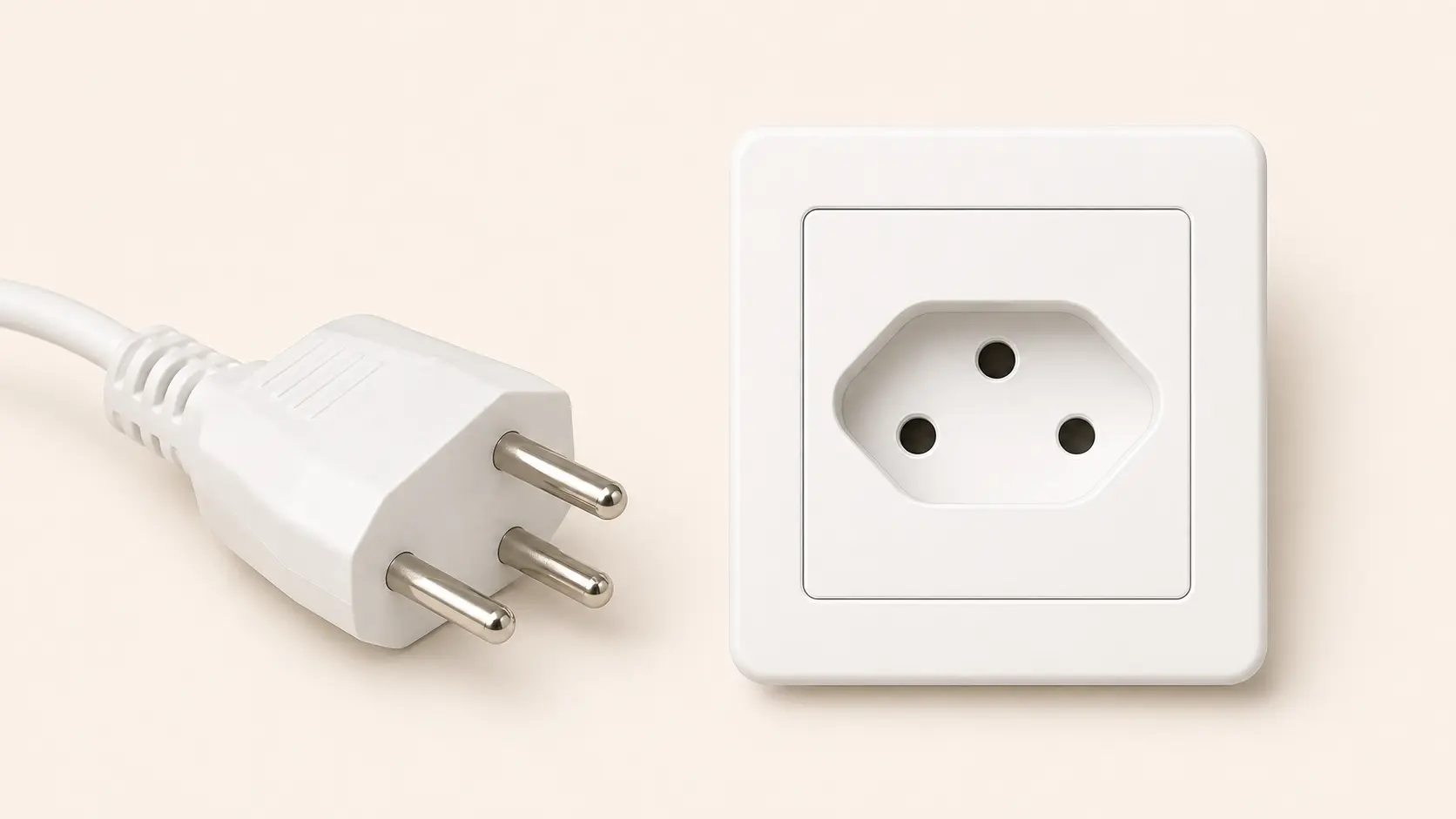
Type J Swiss plug with matching three-hole socket

Type J: Swiss Plug

Three round pins in an offset triangular pattern. Used mainly in Switzerland and Liechtenstein. This plug type is not used in Rwanda and has no historical or practical connection to Rwanda’s electrical system.

Correction Timeline

Pre-2020s

Error enters IEC-derived databases

IEC-sourced data lists Rwanda as using plug types C and J. The origin is likely a data entry mistake. Type J (Swiss) was associated with Rwanda without basis.

Years following

Propagation across the web

Travel sites, adapter retailers, and reference databases copy the C/J listing from upstream sources without independent verification. The error becomes widely repeated.

2025

IEC World Plugs corrected

The IEC World Plugs database removes Type J from Rwanda's listing and updates it to C, E, F, and G. Some databases list Type F because Type E and Type F are often grouped together in European plug-compatibility data; that does not mean Rwanda commonly has Type F Schuko wall sockets.

Present

Most sources corrected, some lag behind

The majority of authoritative sources no longer list Type J for Rwanda. A few secondary sites still display the old, incorrect C/J data.

Note: The IEC correction occurred in 2025. Earlier timeline periods are approximate, based on observable changes across reference sources.

Quick Facts

Voltage

230 V

Same as most of Europe and Africa

Frequency

50 Hz

Standard AC frequency

Plug types

C, E, G

Type G is the official standard

Plug Compatibility

European 2-pin (Type C) plugs work in Type E sockets, common in older buildings.

French/Belgian (Type E) plugs work in Type E sockets, common in older buildings.

British (Type G) sockets are found in newer buildings and hotels. You may also encounter them in some older buildings.

US, Canadian, Chinese, Japanese, Australian, Indian and other non-European plug types will need an adapter.

A universal travel adapter is recommended for the best coverage.

Frequently Asked Questions

What plug types are used in Rwanda?
Rwanda uses plug types C, E, and G. Type C (Europlug) fits directly into Type E sockets and is used for low-power devices like chargers and laptops. Dedicated Type C sockets are very rare. Type E (French/Belgian) was the former standard and remains the most common grounded socket in older buildings. Type G (British) is Rwanda's official standard, adopted as part of East African Community harmonisation, and now required in all new construction.
Does Rwanda use Type J plugs?
No. Rwanda does not use Type J plugs. The correct plug types for Rwanda are C, E, and G. If a website lists Type J for Rwanda, treat it as outdated or incorrect information. Type J is the Swiss plug standard and is not used in Rwanda.
What voltage and frequency does Rwanda use?
Rwanda uses 230 V at 50 Hz, the same standard as most of Europe and Africa. No voltage converter is needed for devices rated for this standard.
Do I need a travel adapter for Rwanda?
It depends on where you're from. European two-pin (Type C) plugs work directly in Type E sockets, which are common in older buildings. US, Australian, and other non-European travellers will need an adapter. A universal travel adapter is recommended for the best coverage across both older and newer buildings.
I'm from the UK — do I need an adapter for Rwanda?
Type G (British) is Rwanda's official standard, so many newer buildings, hotels, and commercial properties will have Type G sockets. However, older buildings may only have Type E (French/Belgian) sockets, which are not compatible with Type G plugs. It's always a good idea to carry an adapter just in case your accommodation doesn't have Type G sockets.
What is the East African Community (EAC) plug standard?
Rwanda has adopted Type G (British BS 1363) as its official plug standard, as part of East African Community harmonisation. Along with Kenya, Tanzania, and Uganda, Rwanda now requires Type G sockets in all new electrical installations. This means Type G is becoming increasingly common, especially in Kigali and other urban centres.

Sources & Evidence

Primary and secondary references confirming Rwanda’s plug types. Some references include Type F because Type E and Type F are often grouped together in European plug-compatibility data; this page keeps the practical guidance focused on Types C, E and G. Each source was independently checked.

Checked references

DEAS 495-2 — Specification for switched and unswitched socket outlets· East African Community / Rwanda Standards Board (RSB)
Lists: G (EAS 495)

The full text of the Draft East African Standard for 13 A shuttered socket-outlets. Specifies requirements for household, commercial, and light industrial use at up to 250 V / 50 Hz, using plugs per EAS 495-1. Part of the four-part EAS 495 series based on BS 1363, which defines the Type G plug system.

Accessed: April 2026

Public Review Notice #41· Rwanda Standards Board (RSB)
Lists: G (EAS 495)

Official RSB notice listing DEAS 495-1 through 495-4 (2024 revision) for public review — the East African Standard for 13 A fused plugs, socket-outlets, adaptors, and connection units. EAS 495 is based on BS 1363, which defines the Type G plug system.

Accessed: April 2026

IEC World Plugs· International Electrotechnical Commission
Lists: C, E, F, G

The official IEC database corrected Rwanda's listing in 2025 to types C, E, F, and G, removing Type J from Rwanda's listing. Some databases list Type F because Type E and Type F are often grouped together in European plug-compatibility data; that does not mean Rwanda commonly has Type F Schuko wall sockets.

Accessed: April 2026

worldstandards.eu· World Standards
Lists: C, E, F, G

Lists four types including F (Schuko). Explains that C and E are from Belgian colonial history, while G was introduced through East African Community trade. Notes that "Rwanda takes a mix-and-match approach to electrical plugs."

Accessed: April 2026

Energy in Rwanda· Wikipedia
Lists: C, E, G

Confirms the historical use of C and E from Belgian colonial influence, and that Rwanda adopted Type G (BS 1363) as its official standard for new installations as part of EAC harmonisation.

Accessed: April 2026

Lists: C, E, G

States that "Type C or E plug will work in most places" and that Type G is Rwanda's official standard, found in modern construction.

Accessed: April 2026

Lists: C, E, F, G

Lists C, E, F, and G for Rwanda at 230V / 50Hz, including Type F because European plug-compatibility data often groups Type E and Type F together. That does not mean Rwanda commonly has Type F Schuko wall sockets.

Accessed: April 2026

Power plugs and sockets in Rwanda· Power Plugs & Sockets World
Lists: C, E, F, G

Lists Type C as the primary plug alongside E, F, and G. Includes a compatibility checker for travelers and confirms Rwanda's 230V / 50Hz standard. Type F is best read as compatibility-data grouping, not as evidence that Schuko wall sockets are common in Rwanda.

Accessed: April 2026

Power plugs in Rwanda· World Power Plugs
Lists: C, E, F, G

Lists C, E, F, and G at 230V / 50Hz. Notes Type C compatibility with E and F sockets, and that Type G outlets only accept Type G plugs. Type F should be read as compatibility-data overlap, not as evidence that Schuko wall sockets are common in Rwanda.

Accessed: April 2026

Outdated Listings

The following sources still show the old incorrect Rwanda plug data. They are listed here as examples of the error, not as reliable sources for Rwanda plug types.

Examples of old C/J listings

Still displays the old, incorrect C/J listing as of April 2026. An example of the error persisting in secondary sources.

A UK charity's travel adaptor guide still lists the incorrect C/J combination for Rwanda as of April 2026, likely sourced from the old IEC data.